June 6–28, 2026
150 First Avenue, New York, NY 10009
Opening: Saturday, June 6, 2026, 6–8 PM
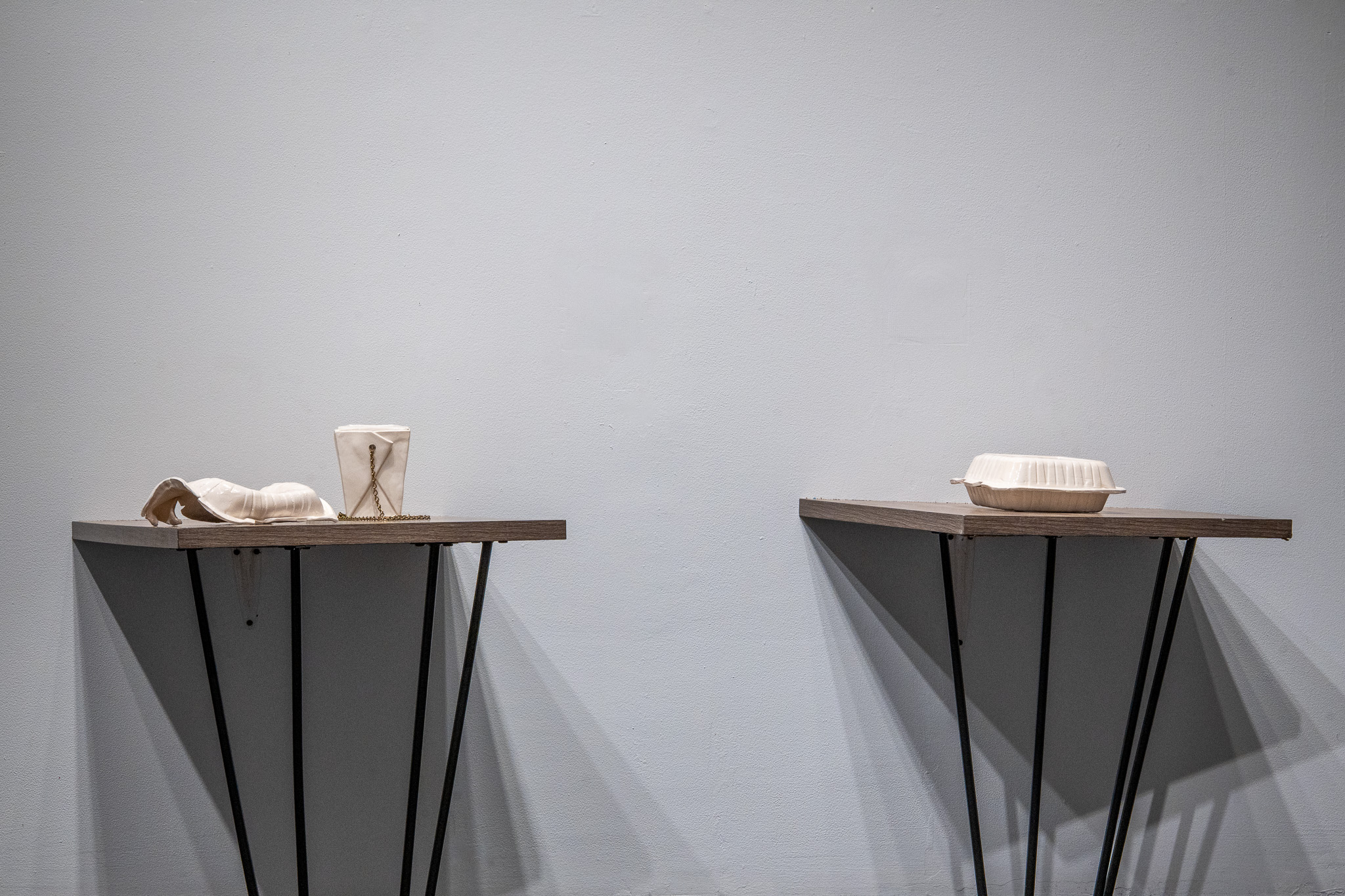
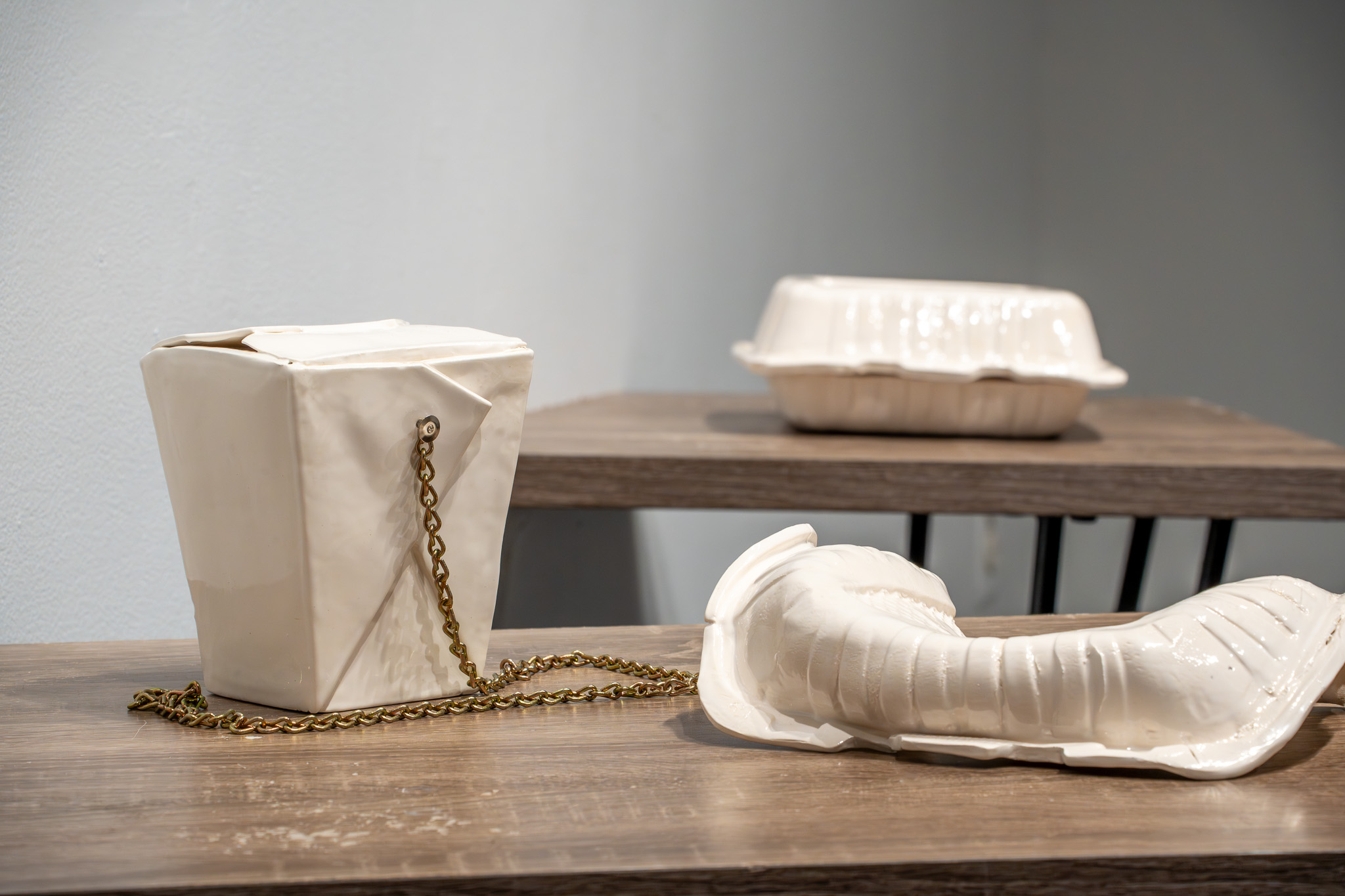
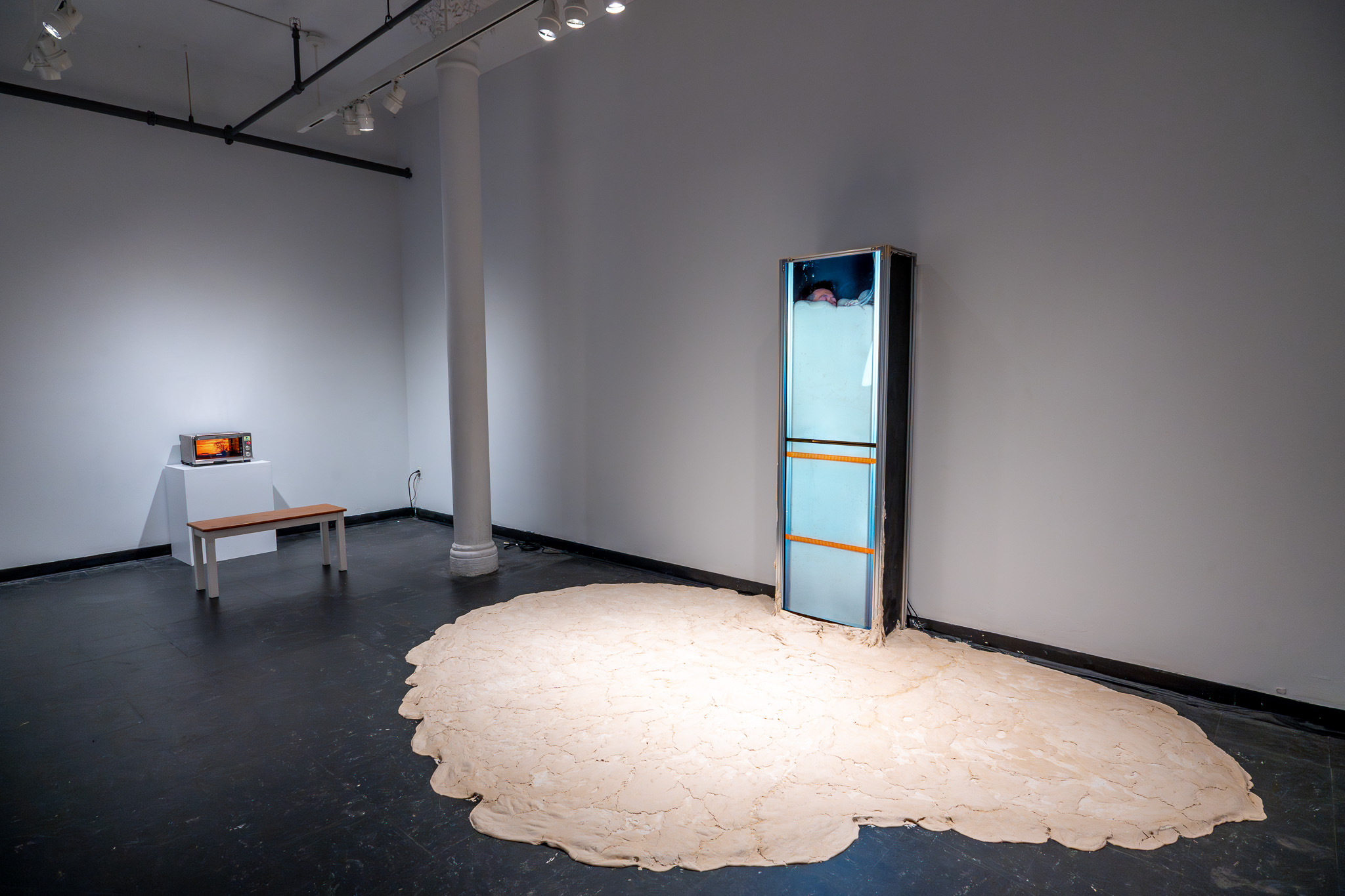
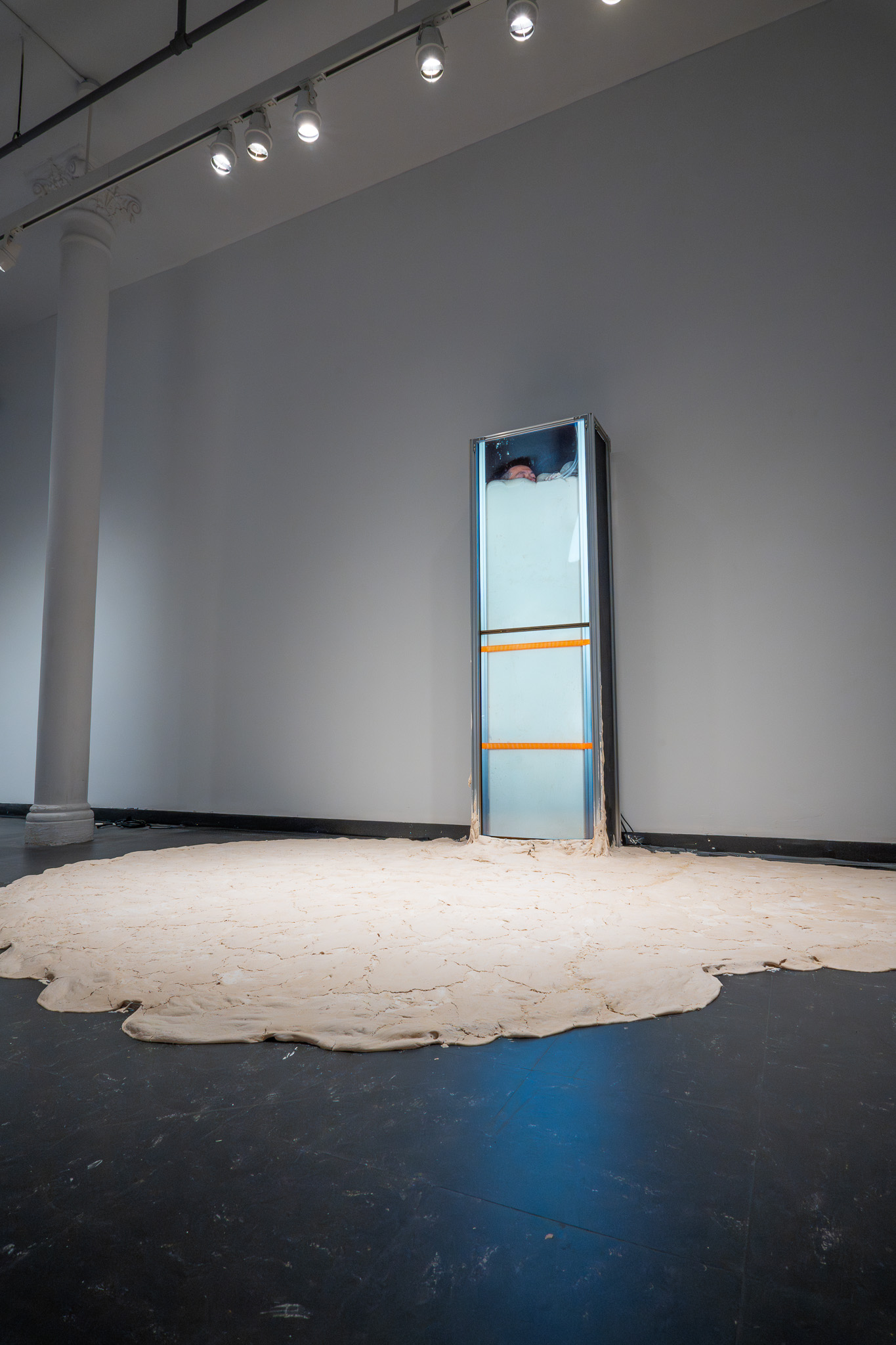
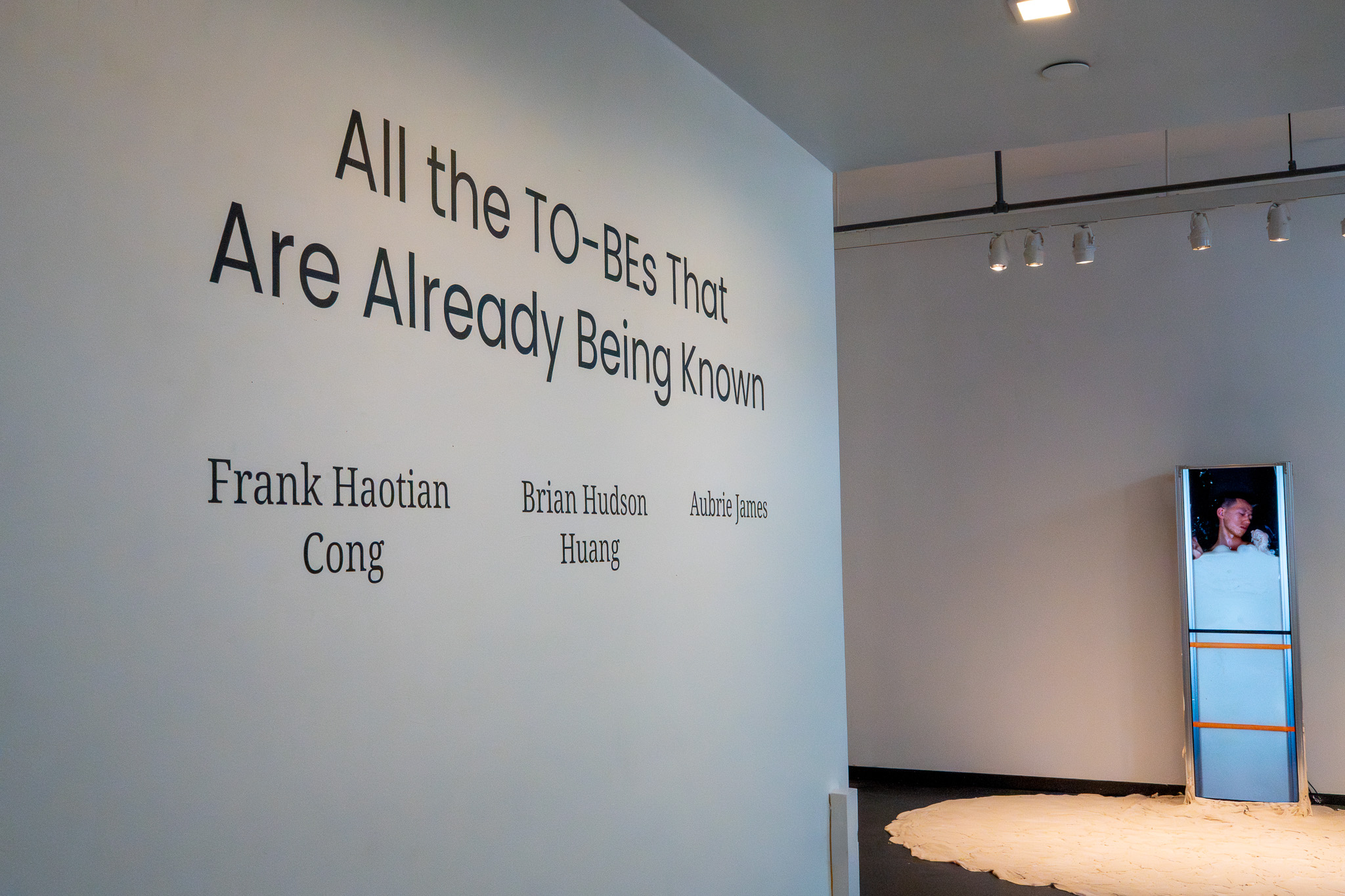
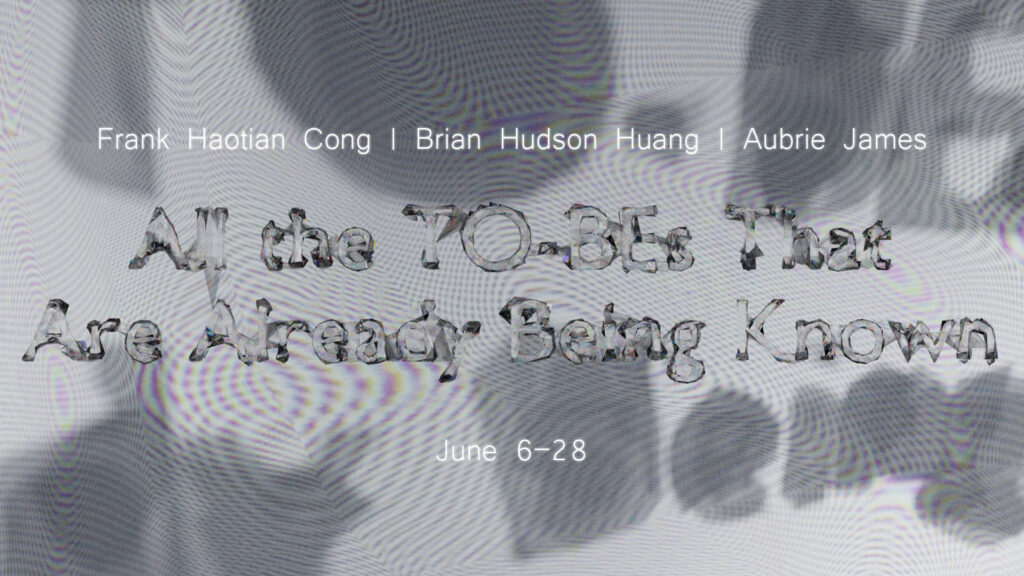
As the world allegedly hurtles towards an imminent apocalypse, science and technology are either characterized as panaceae of innovation that will provide perfectly optimized solutions to all of our problems, or an opened pandora’s box reaching critical mass. All the TO-BEs That Are Already Being Known presents three artists with research-based practices that explore, confront, and problematize the contemporary state of Scio-Techne-Knowledge production. Spanning drawing, sculpture, and multimedia installation, the works in this exhibition eschew these normative notions and instead divulge the systems, hierarchies, and paradigms siloed by contemporary technoscience by positioning art as a methodology for investigation and entanglement.
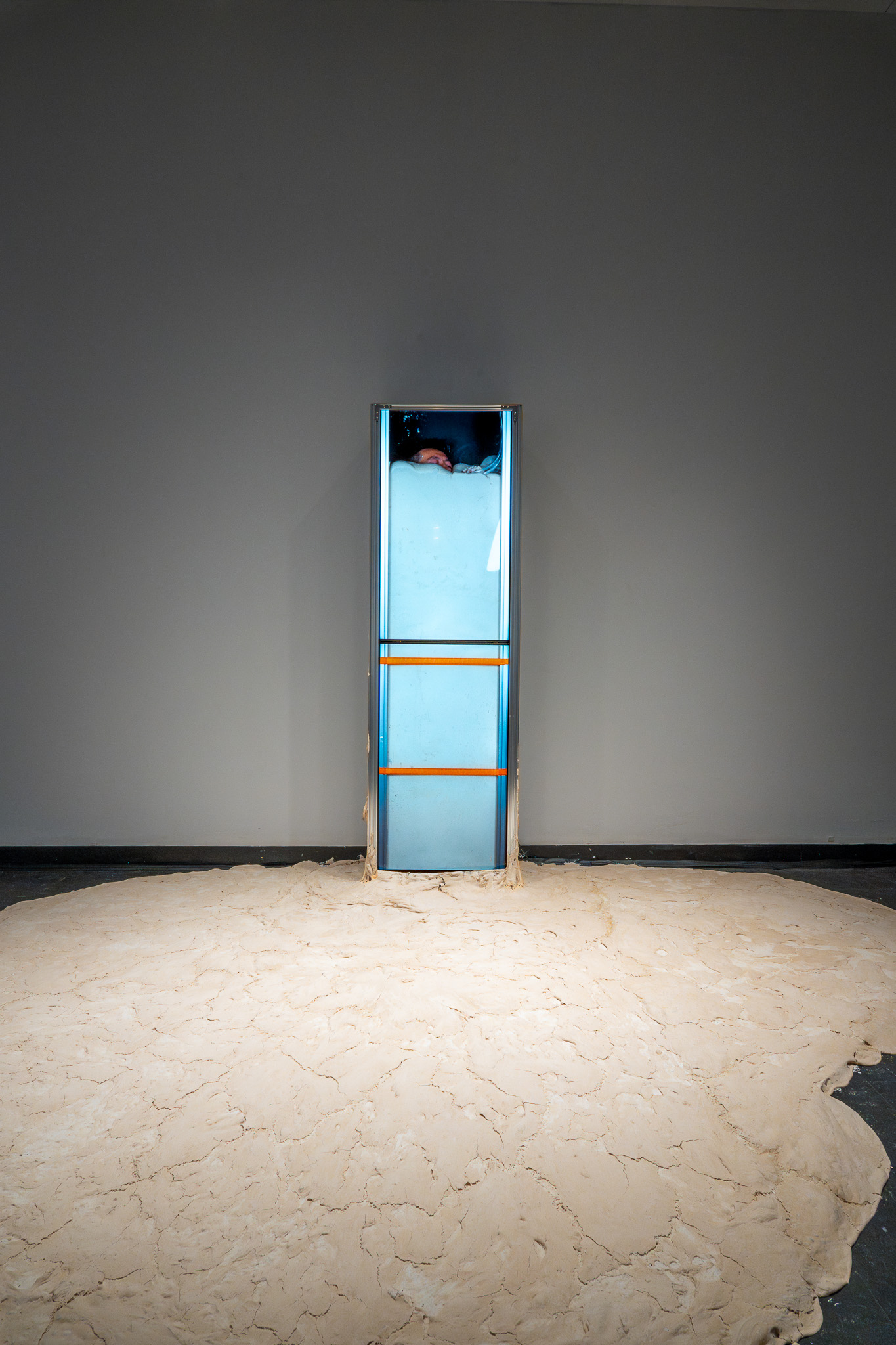
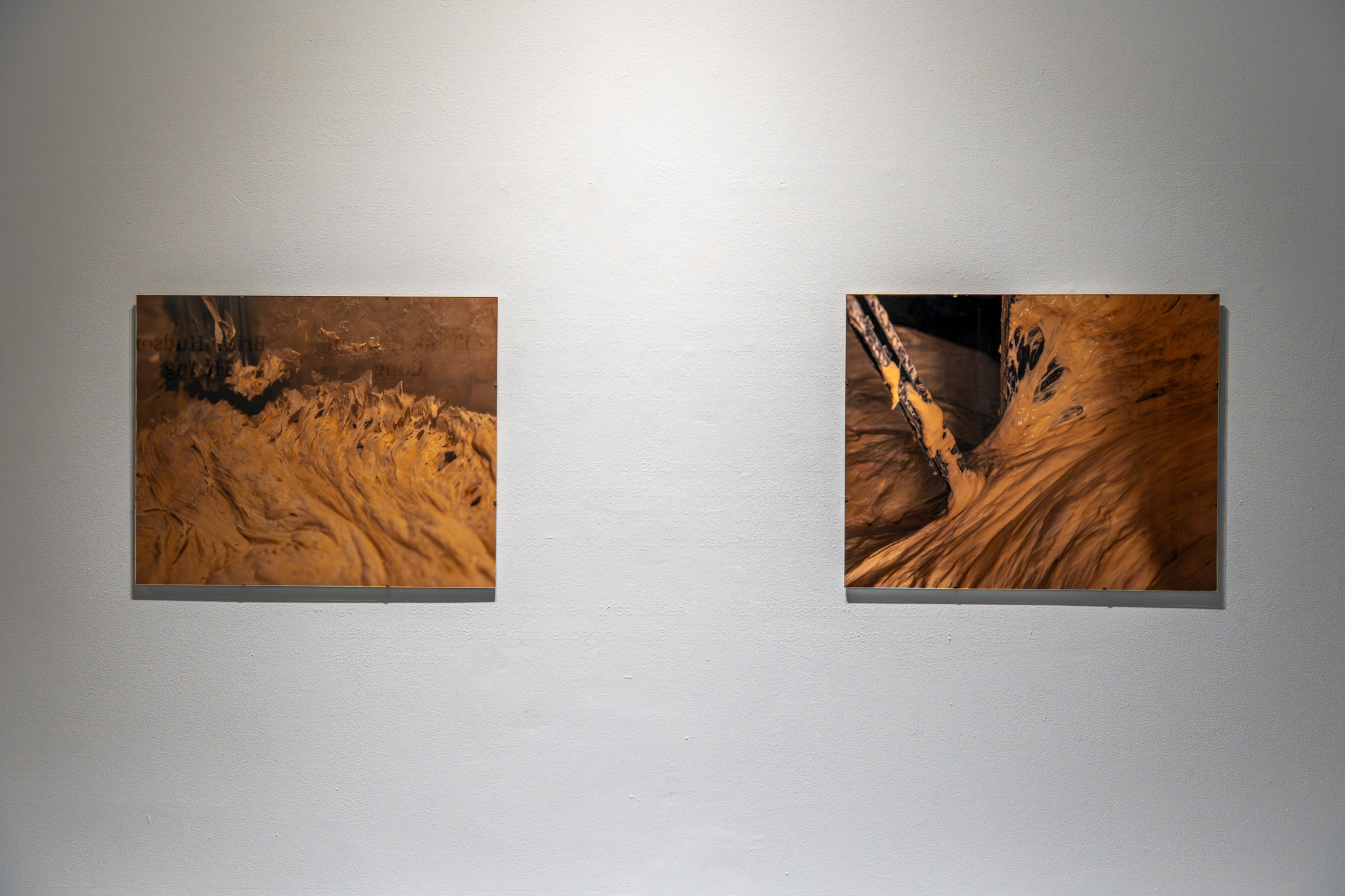
Frank Haotian Cong’s work began with the observation that the bodies of laborers, along with the diverse crops and microbes native to a landscape, are largely absent from the “fast fermentation” reliant on commercially available flour and yeast. The lingua franca that frames fermentation as either cellular manufacturing or symbiosis seems inadequate to account for the complexity of these cultural and material interactions. Through endurance performance and installation, Frank employs extreme contact and intensified sensory experience to confront such absence and simplification. He also has baked some sunset for everyone.
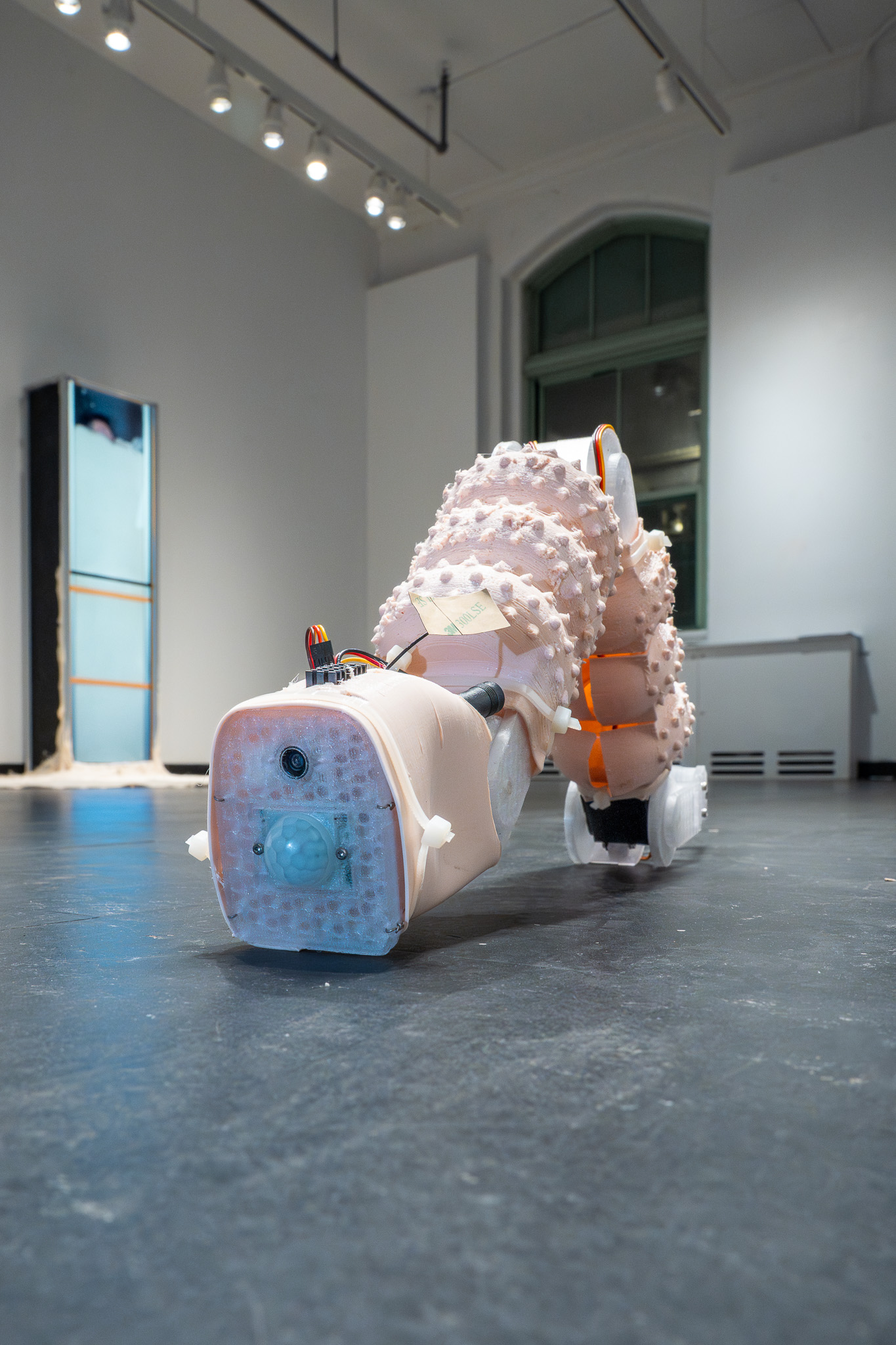
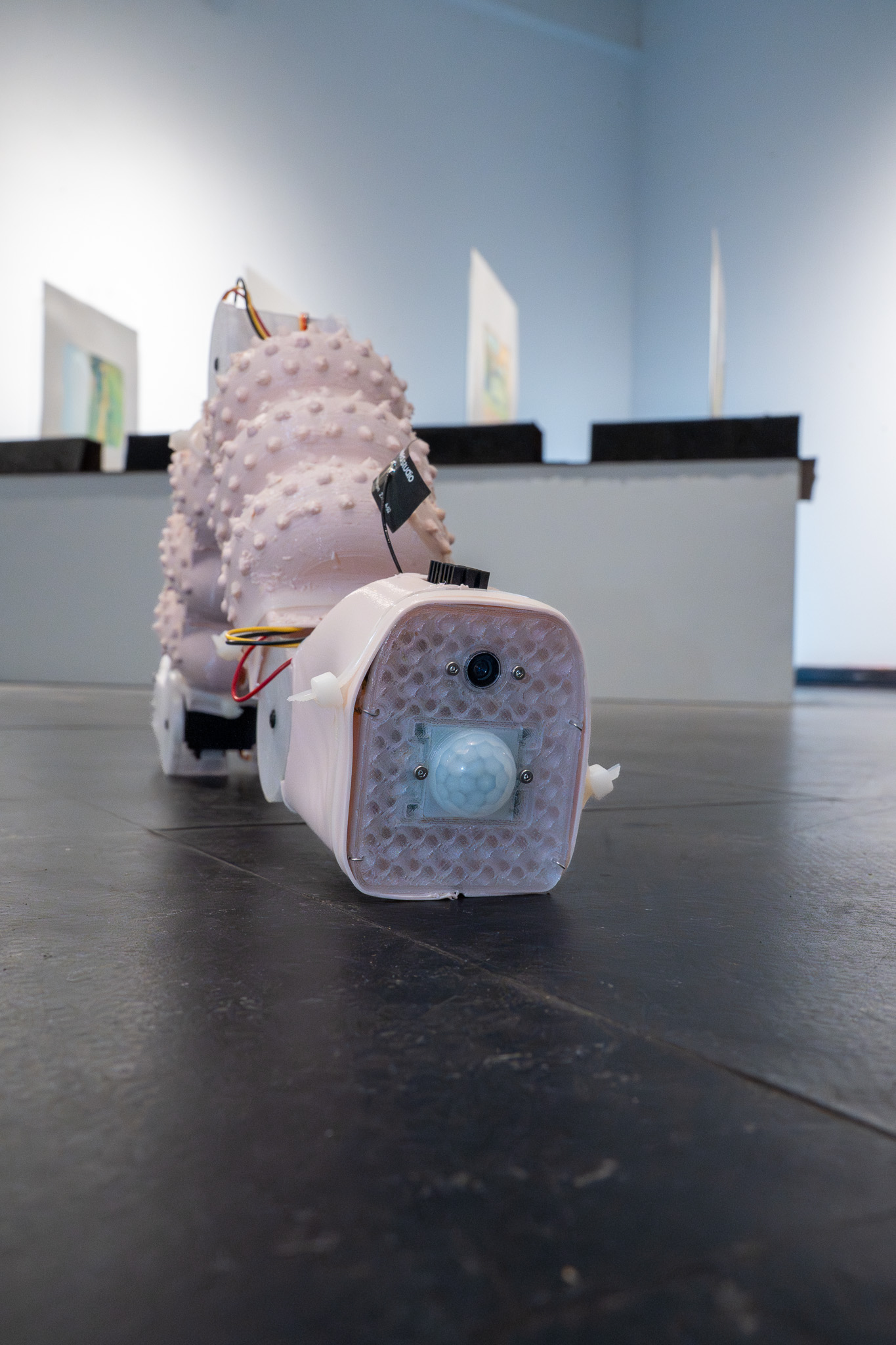
In The Dispossession of B.H., Brian Hudson Huang releases robots that slither/crawl across the floor, haunting/infesting the gallery. Neither completely organic, machine, insectoid, or reptilian, they instead are merely observers of the world around them, and react accordingly. Drawing from contemporary anxieties of robotics instrumentalized for war, surveillance, and companionship, these robots blur the line between the autonomy of self-contained beings and their possible interactions and consequences in the lifeworld.
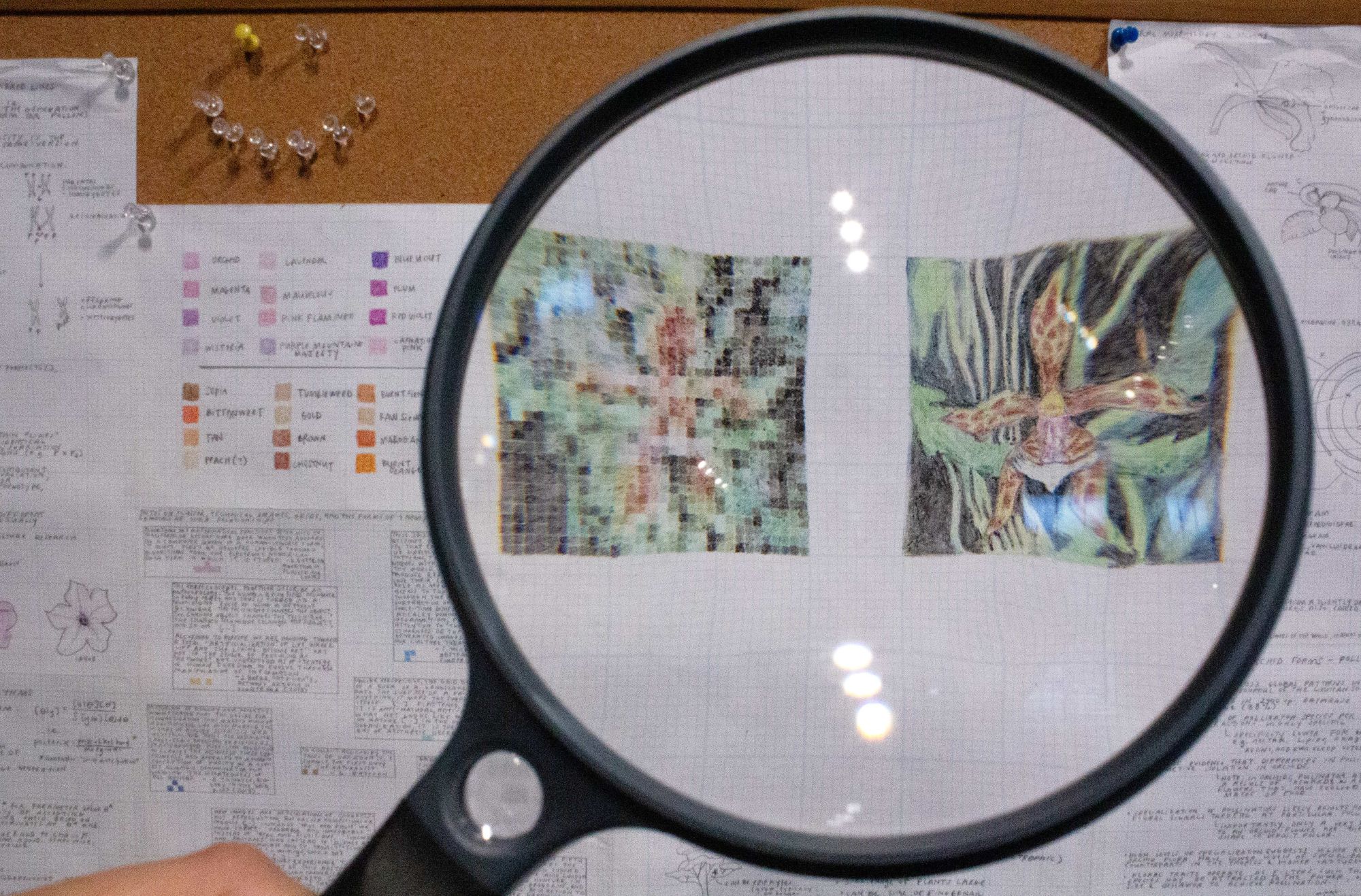
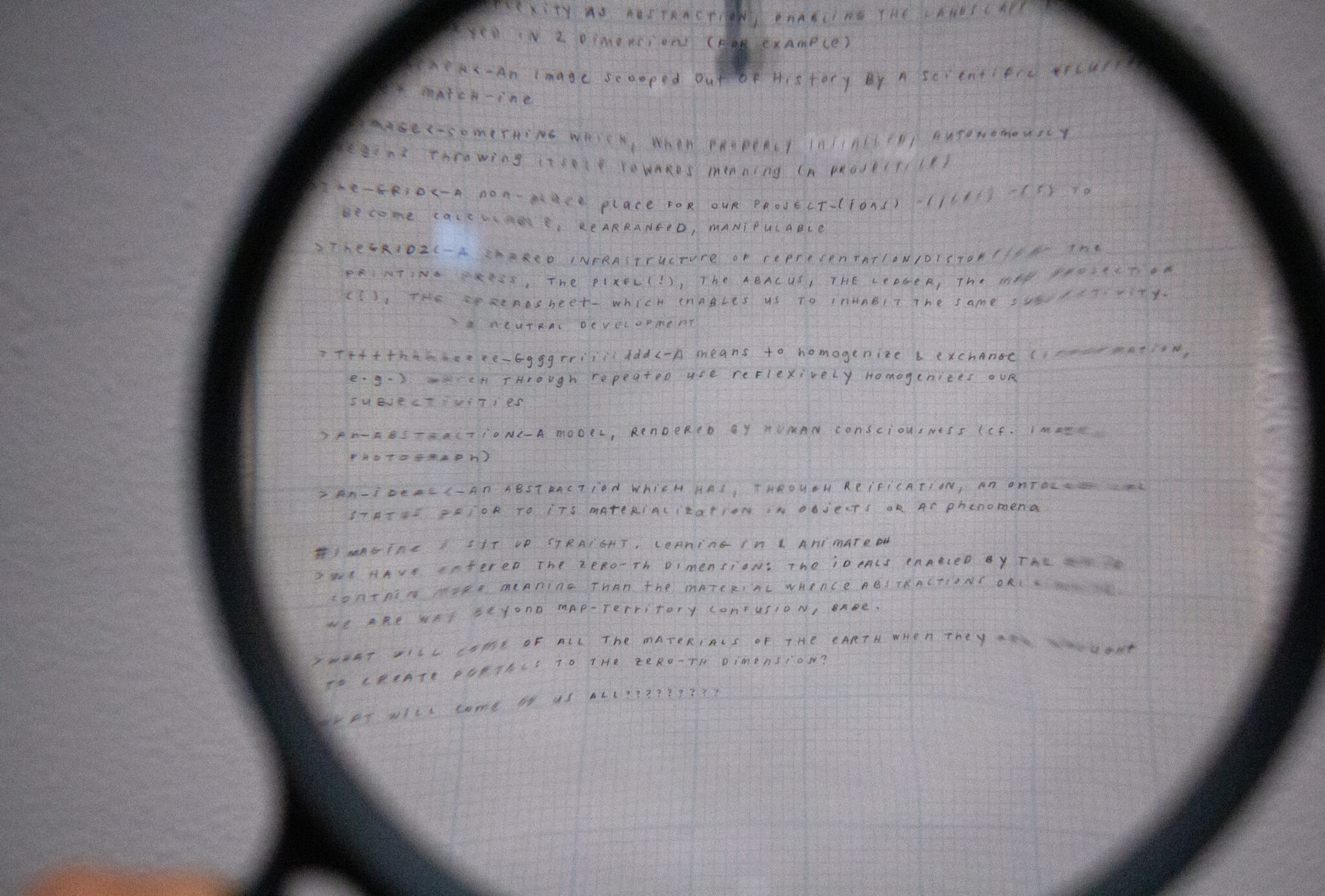
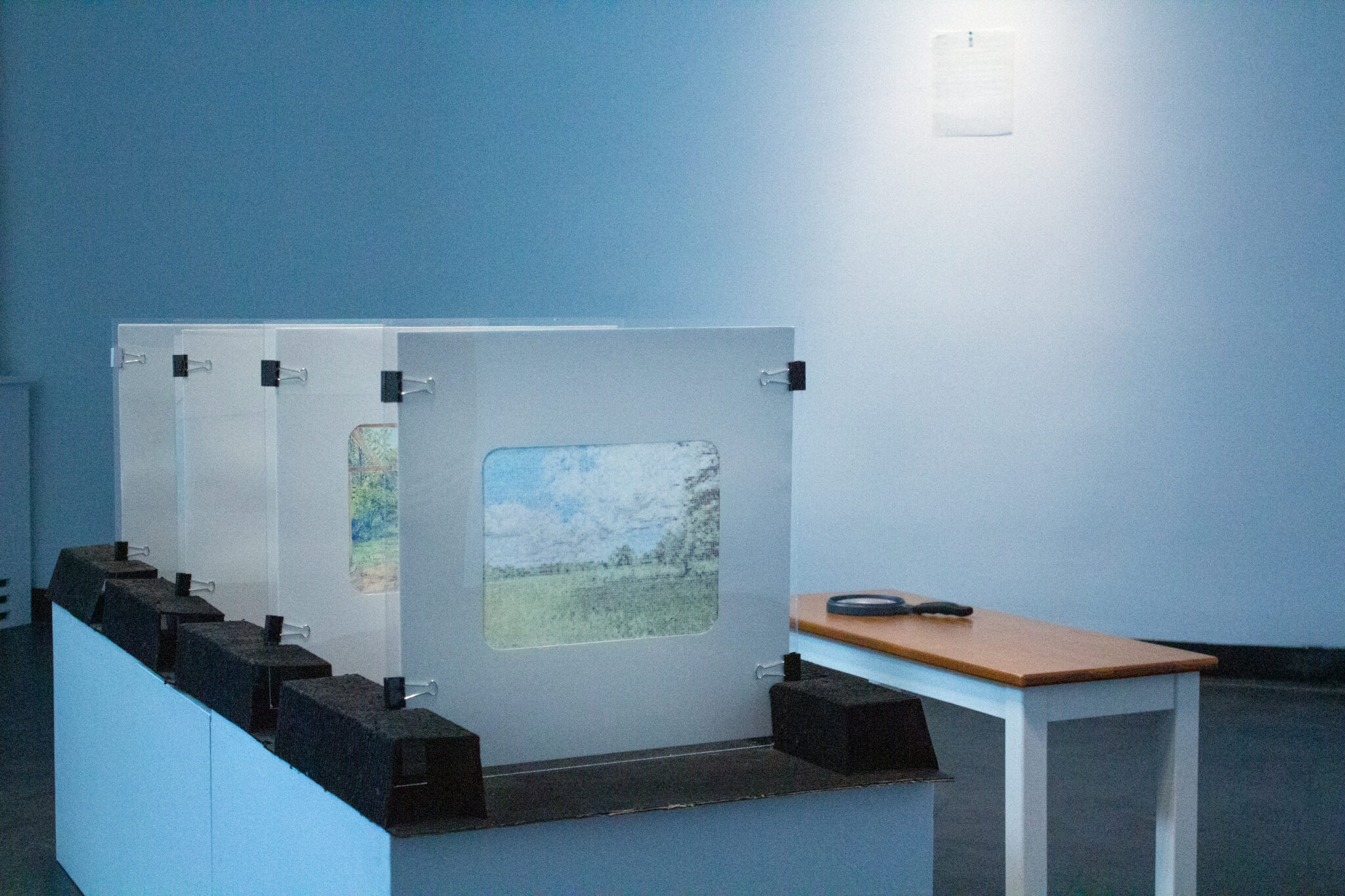
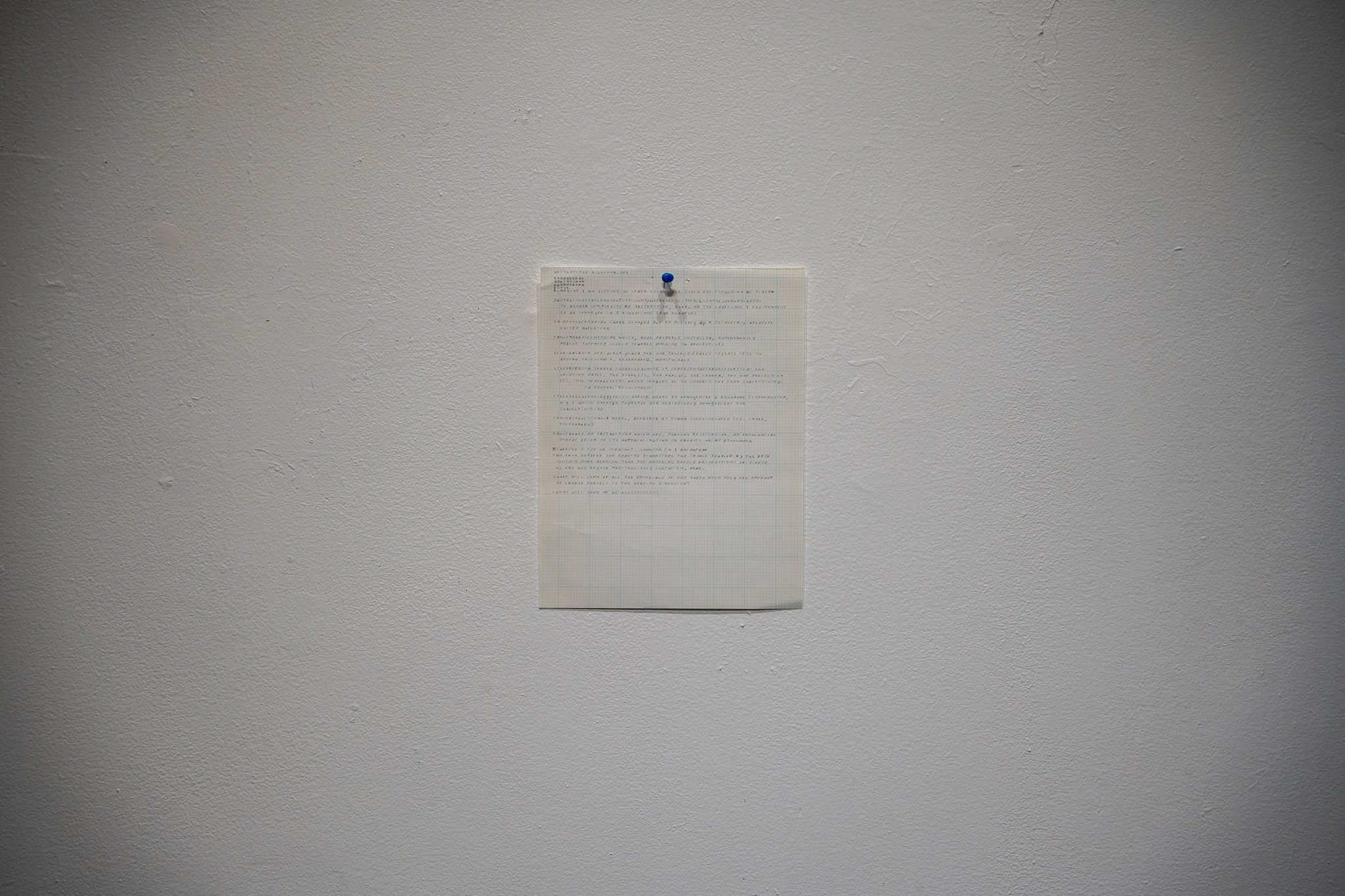
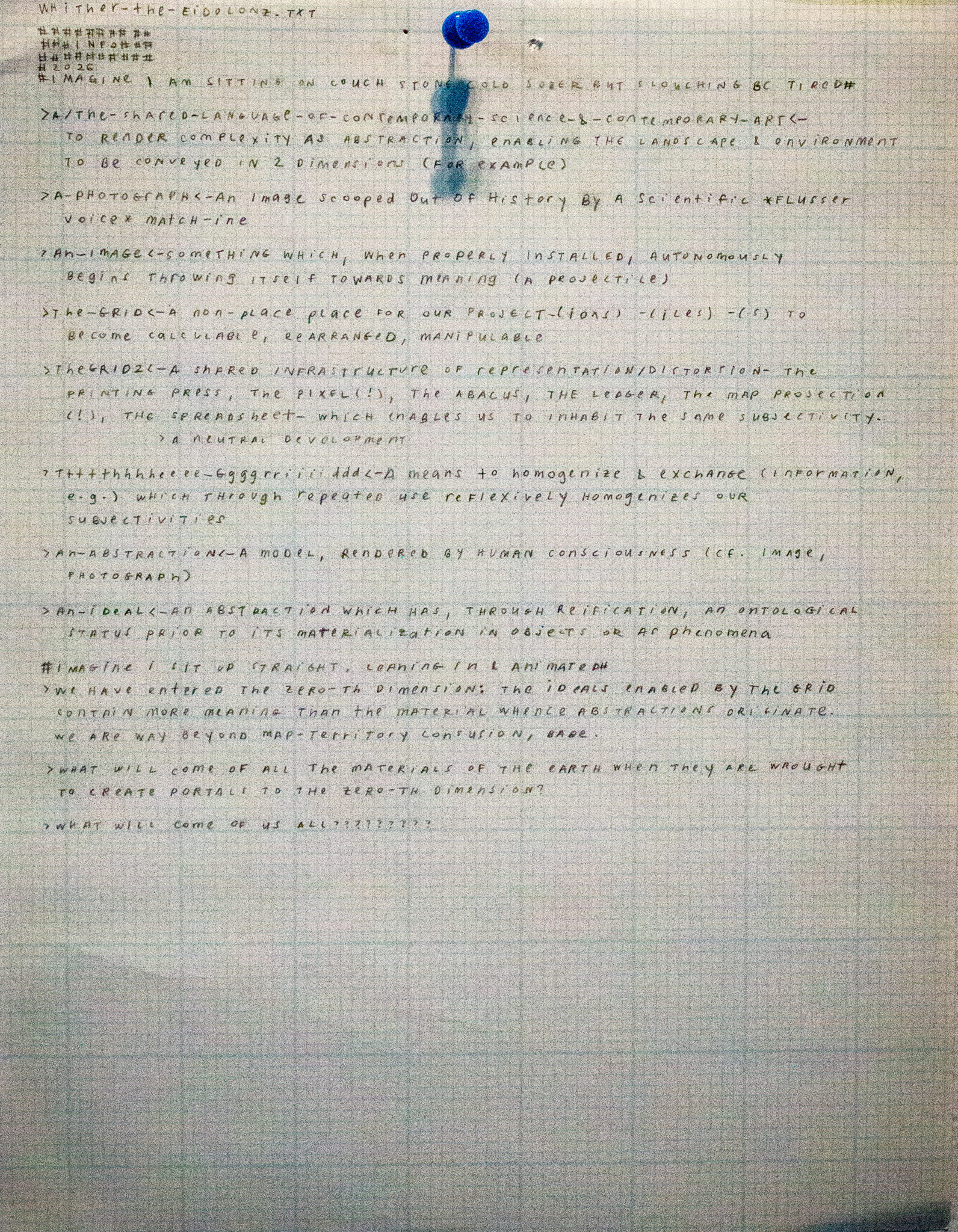
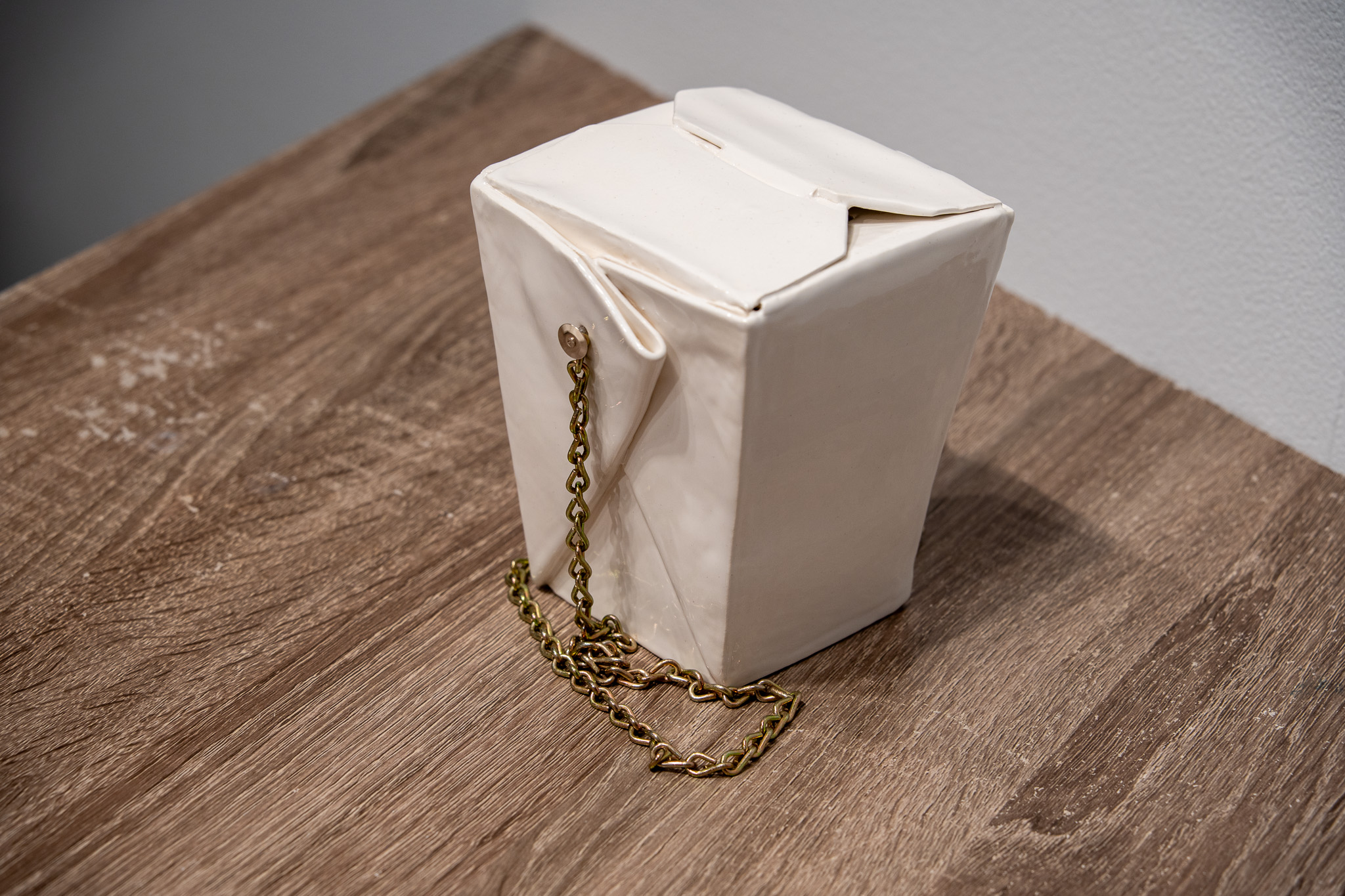
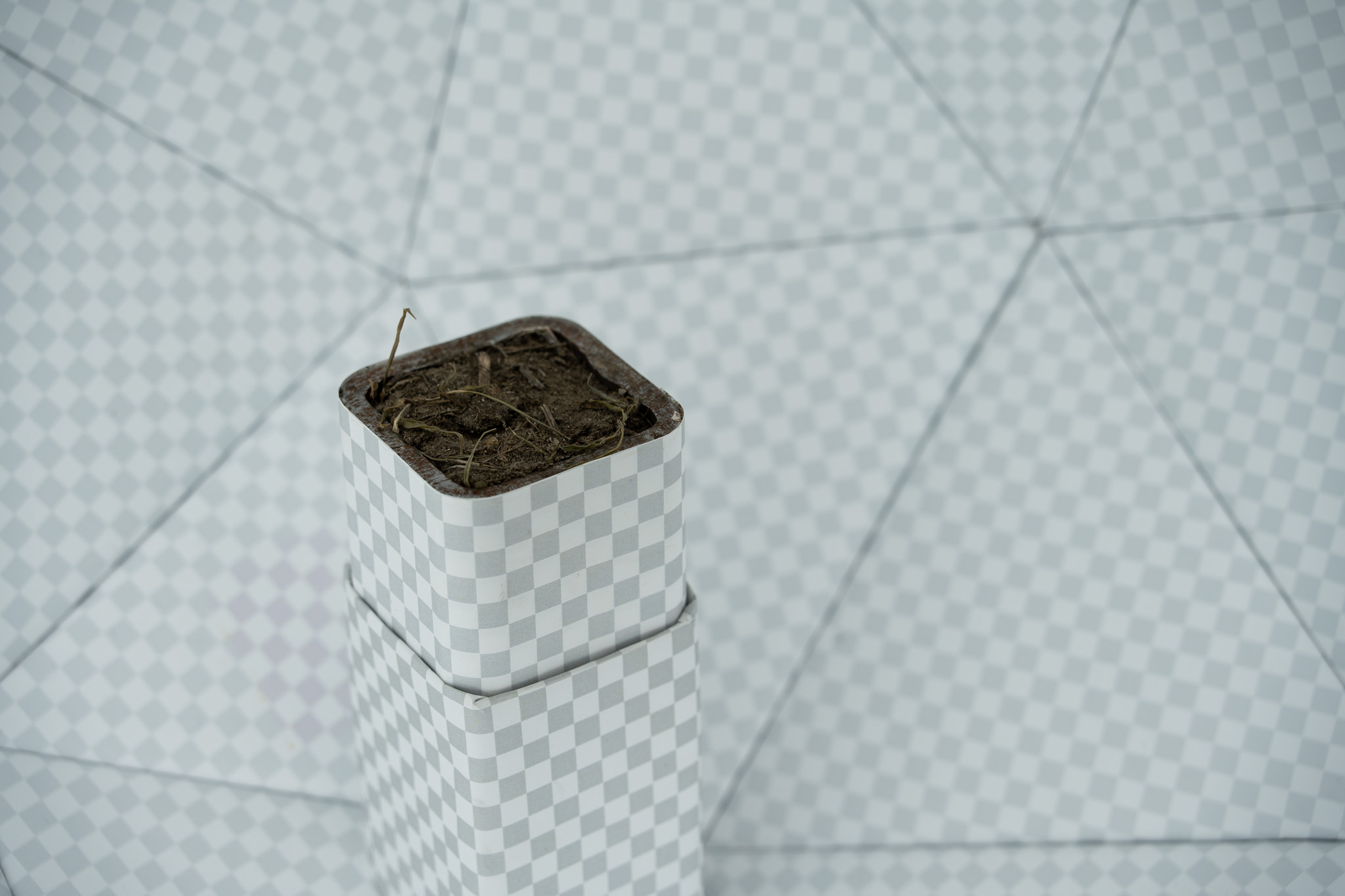
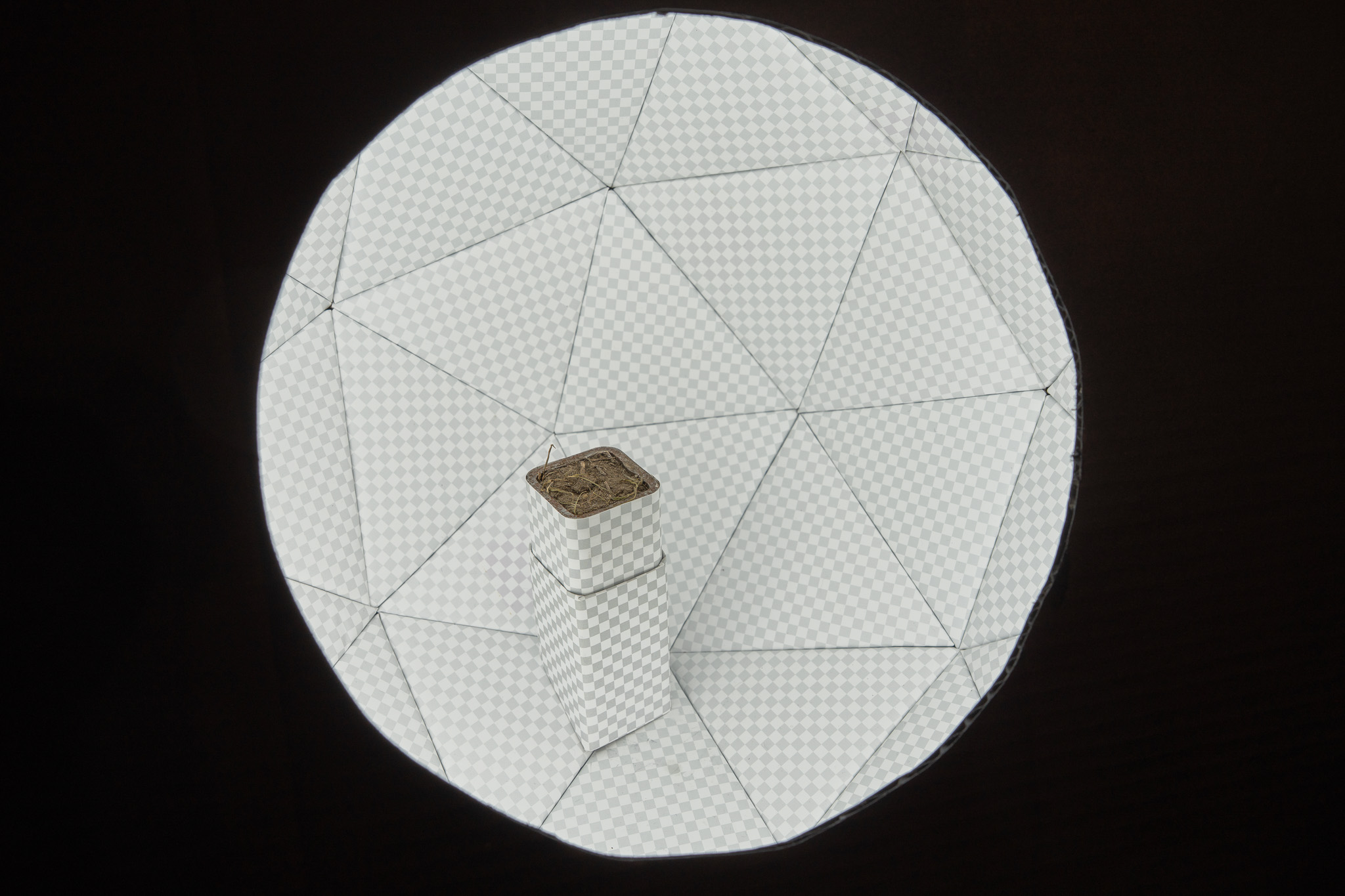
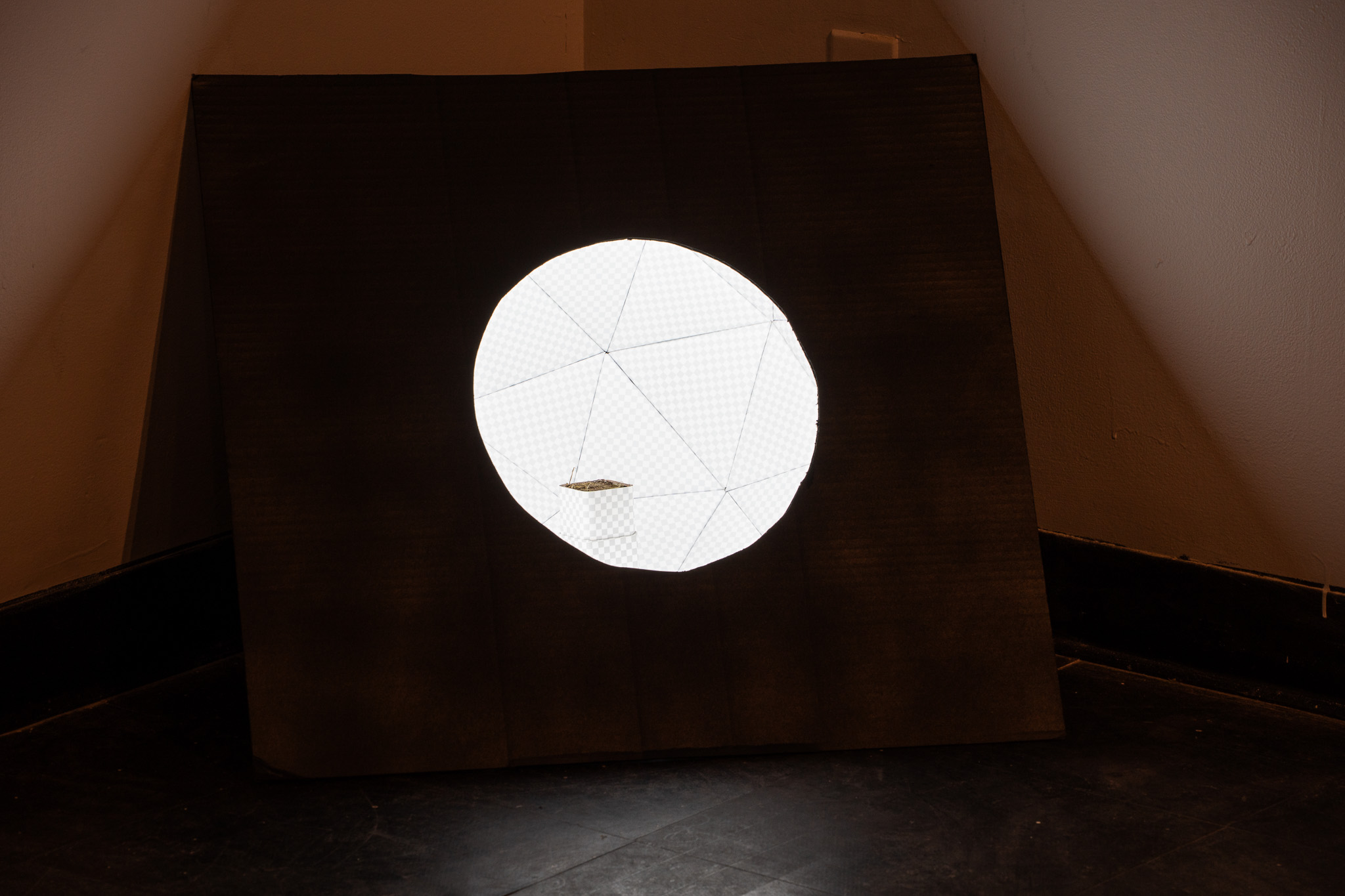
Aubrie James’s drawings, diagrams, and sculptures call attention to the grid and modularity as conceptual and aesthetic principles organizing biological inquiry, digital imagery, and information technology. Diagrams, notes, drawings, and graphs—alongside a piece of earth from the contested site of a future data center—surface the interaction of models, memories, and images of landscapes from the (subliminal, ubiquitous) grid, questioning the quantitative translation of life. Together, these works ask after the kaleidoscopic profusion of land imagery to explore quantitative capture, meat-versus-silicon-memory, and the mass-mediations of landscape(s).
Frank Haotian Cong is a media artist and educator based in Shanghai and Cambridge, MA. His practice explores how humans, technologies, and nonhuman species can connect meaningfully through relations of control, care, and maintenance. Working across installation, performance, living materials, and sensory processes, he creates situations in which agency is distributed among human and more-than-human actors, including Siamese fighting fish, silkworm moths, microbes, dough, machines, and the human body. Much of his recent work focuses on fermentation, sprouting, and bodily contact as ways to think through ecological interdependence. He has exhibited, curated, and presented at a range of art, design, and technology institutions and events, including Première Vision in Paris (2016), the Consciousness Reframed Conference (2017), Out of Control at Songjiang Art Museum (2018), Ars Electronica in Linz (2019), the Shanghai Science Festival (2020), Lab2 at Liu Haisu Art Museum (2022), and the Massachusetts Institute of Technology (2023–2025). Frank is the founder of Knot Cafe, an independent art studio. He has also held teaching and research positions at institutions including New York University Shanghai, the Shanghai Institute of Visual Arts, the China Academy of Art, and the Massachusetts Institute of Technology.
Brian Hudson Huang is a practice-based researcher and artist from Brooklyn, New York. His practice focuses on how knowledge-making in the sciences can act as a form of self-witnessing, producing estrangement and inscrutability rather than coherence and clarity. He is a recipient of the New York Community Trust Van Lier Fellowship and the Vincent J. Mielcarek Jr. Memorial Fund Prize. He has participated in the Smack Mellon Artist Studio Program and the NARS Studio Relief Residency. He received his BFA from The Cooper Union in 2019 and his SM in Architectural Studies from MIT in 2025.
Aubrie James uses her intimate understanding of ecology as a discipline to probe methods of knowing. Her interdisciplinary work plays with scientific aesthetics and convention to theorize in and about ecology. Beginning her career in scientific research, her work led her to question how scientific convention had limited her perception and communication of the natural world. Her art practice began as scientific field experiments which were covertly designed as land art, and has expanded to include sculpture, multimedia installation, and socially engaged ecological art. Her work has been exhibited at the MIT Museum, MIT.nano, and the Weisner Gallery in Cambridge, MA; the Distillery Gallery in Boston, MA; deCordova sculpture park in Lincoln, MA; Espacio Enredo in Madrid, Spain; and Red Materia Gallery in Antigua, Guatemala. Her ongoing scientific research focuses on plant biodiversity and has most recently been published in academic journals including Ecology Letters, Ecological Monographs, and Ecology. She is currently based in Queens, NY.